What Are Cloud Infrastructure Management Services?
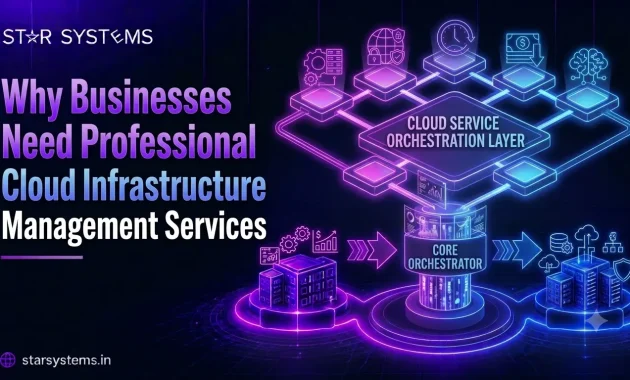
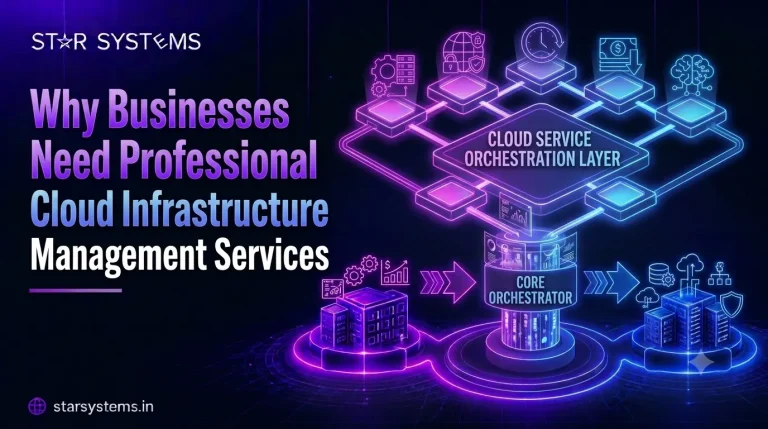
Cloud infrastructure management services involve monitoring, maintaining, securing, and optimizing cloud computing resources to ensure reliable business operations. These services cover essential cloud components such as virtual servers, storage systems, networking, databases, and application environments.
Professional cloud infrastructure management typically includes:
- Cloud monitoring and performance optimization
- Infrastructure security and access management
- Cloud cost monitoring and resource optimization
- Backup and disaster recovery management
- Cloud infrastructure maintenance and technical support
- Hybrid and multi-cloud environment management
Instead of handling these responsibilities entirely in-house, businesses can work with experienced cloud service providers to manage their infrastructure efficiently.
Why Do Businesses Need Professional Cloud Infrastructure Management Services?
Cloud environments require ongoing management to remain secure, reliable, and cost-effective. Here are the key reasons businesses benefit from professional support.
1. Improve Cloud Performance and Reliability
Slow applications and unexpected infrastructure failures can affect customer experience and employee productivity. Professional cloud management teams continuously monitor resource usage, server performance, and application availability.
They identify potential problems early and optimize infrastructure configurations to maintain consistent performance. For businesses running customer-facing applications, reliable cloud infrastructure helps support smooth daily operations.
2. Strengthen Cloud Security and Data Protection
Cloud security is a major concern for businesses managing sensitive information. Incorrect access permissions, outdated software, and poorly configured networks can increase security risks.
Professional cloud infrastructure management services help businesses implement:
- Identity and access management
- Data encryption and secure connectivity
- Security monitoring and vulnerability management
- Regular security updates
- Backup and recovery procedures
These practices help protect business information and support applicable compliance requirements.
3. Reduce Unnecessary Cloud Infrastructure Costs
Cloud platforms offer flexible pricing, but poor resource management can result in unnecessary spending. Businesses may pay for unused virtual machines, oversized storage, or computing resources that exceed actual requirements.
Cloud infrastructure management helps control costs through resource right-sizing, usage monitoring, and capacity planning. For example, a business running development servers outside working hours may reduce expenses by scheduling those resources appropriately.
Effective cloud cost optimization improves financial visibility without compromising essential application performance.
4. Support Business Growth with Scalable Infrastructure
Business requirements change over time. An organization may need additional computing resources during seasonal demand, product launches, or business expansion.
Professional cloud management helps businesses adjust infrastructure capacity based on workload requirements. Cloud experts can configure scaling policies, review infrastructure performance, and recommend suitable resource upgrades.
This flexibility allows businesses to support growth without constantly investing in physical hardware.
5. Minimize Downtime and Improve Business Continuity
Unexpected downtime can interrupt customer transactions, internal operations, and important business services. Professional cloud management includes proactive monitoring, incident response, backup planning, and disaster recovery preparation.
These capabilities help businesses detect infrastructure issues and recover from disruptions more effectively. A well-designed disaster recovery strategy also defines recovery time objectives and recovery point objectives based on business requirements.
6. Reduce the Workload on Internal IT Teams
Managing cloud infrastructure involves monitoring, patching, troubleshooting, security reviews, and performance optimization.
For smaller IT teams, handling these responsibilities alongside business projects can become challenging. Professional cloud infrastructure management services reduce this operational burden.
Internal teams can spend more time developing applications, improving customer experiences, and supporting business innovation.
How IBM Cloud Infrastructure Services Support Business Operations
For enterprises managing complex workloads, IBM Cloud Infrastructure Services provide options for building secure, scalable, and flexible cloud environments.
IBM Cloud supports virtual servers, bare metal infrastructure, Virtual Private Cloud (VPC), storage, networking, and hybrid cloud connectivity.
Businesses can use these capabilities to modernize existing infrastructure while maintaining control over critical applications.
Key benefits include:
- Secure cloud environments: IBM Cloud VPC provides logically isolated networks with configurable security groups, network access controls, and private connectivity options.
- Flexible computing resources: Organizations can select virtual servers, bare metal servers, or specialized infrastructure based on application requirements.
- Hybrid cloud connectivity: IBM Cloud supports integration with existing data centers and other cloud environments.
- Business continuity: Backup, replication, and disaster recovery solutions help businesses prepare for infrastructure failures.
- Infrastructure optimization: Monitoring and resource management help organizations improve performance and control operational costs.
With professional IBM Cloud infrastructure management, businesses can configure and operate these services according to their security, performance, and growth requirements.
In-House vs Professional Cloud Infrastructure Management
Businesses can manage cloud infrastructure internally or work with a professional service provider. The right approach depends on available expertise, operational complexity, and business priorities.
Professional services can be particularly useful for organizations operating complex, hybrid, or multi-cloud environments.
Why Choose Star Systems for Cloud Infrastructure Management?
Choosing the right cloud management partner is important for maintaining secure and reliable business infrastructure. At Star Systems, we help organizations simplify cloud operations through structured infrastructure management, monitoring, security, and optimization.
As an IBM Cloud Gold Partner, Star Systems provides cloud expertise for businesses planning to deploy, migrate, or manage enterprise workloads.
Our capabilities include:
- Cloud infrastructure monitoring: Track infrastructure health, resource usage, and application performance.
- Cloud security management: Support secure configurations, access controls, and infrastructure protection.
- Cloud cost optimization: Identify inefficient resource usage and opportunities to improve cloud spending.
- Hybrid and multi-cloud management: Support infrastructure across different cloud and on-premises environments.
- IBM Cloud Infrastructure Services: Design, deploy, and manage IBM Cloud VPC, virtual servers, networking, and enterprise workloads.
- Ongoing cloud support: Help businesses maintain infrastructure stability and improve operational efficiency.
Our approach focuses on understanding each organization’s requirements and building cloud environments that support long-term business goals.
Explore our Cloud Infrastructure Management Services and IBM Cloud Infrastructure Services to learn more about our capabilities.
How to Choose the Right Cloud Infrastructure Management Provider
Before selecting a cloud management provider, businesses should evaluate their technical capabilities and service approach.
Consider whether the provider offers experience with your cloud platform, proactive monitoring, security management, cost optimization, and disaster recovery planning.
It is also important to review service-level agreements, incident response procedures, reporting capabilities, and the scope of ongoing support.
A suitable provider should understand your business requirements and recommend practical solutions rather than applying the same infrastructure approach to every organization.
Conclusion
Cloud adoption creates opportunities for business growth, but maintaining a secure and efficient cloud environment requires continuous management.
Professional cloud infrastructure management services help businesses improve performance, strengthen security, control costs, and maintain operational reliability.
Whether an organization uses public cloud, hybrid infrastructure, or IBM Cloud, the right management approach helps ensure cloud resources support business objectives.
With Star Systems cloud expertise and IBM Cloud Infrastructure Services, businesses can simplify infrastructure operations and build a stronger foundation for future growth.
Ready to simplify your cloud operations? Explore Star Systems Cloud Infrastructure Management Services and connect with our team to discuss your requirements.