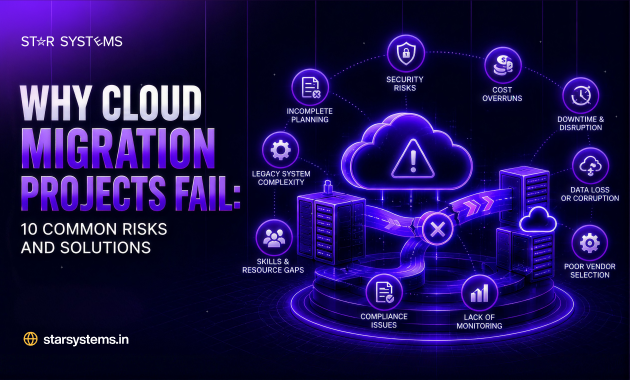
1. No Clear Business Goal
The risk: Many companies migrate because everyone else is doing it. Without a defined purpose, teams make random decisions, and nobody can say whether the project succeeded.
The solution: Set measurable outcomes first, such as lower infrastructure cost, faster releases, or better disaster recovery. Every technical choice should connect back to one of those goals.
2. Incomplete Discovery and Hidden Dependencies
The risk: An application rarely works alone. It talks to databases, batch jobs, licensing servers, and third-party tools. Miss one connection, and something breaks after the cutover.
The solution: Run a thorough discovery before planning anything. Use automated scanning to map servers, storage, networks, and dependencies, then validate the results with the people who actually use the systems.
3. Choosing the Wrong Migration Strategy
The risk: Treating every workload the same way is expensive. Moving an outdated application as-is can carry old problems into a new environment.
The solution: Assess each workload individually. Some should be rehosted, some replatformed, a few refactored, and others retired or kept where they are. A good strategy is never one-size-fits-all.
4. Underestimating the True Cost
The risk: Cloud bills often exceed expectations because of data transfer fees, oversized resources, and the period when old and new environments run side by side.
The solution: Build a realistic cost model before you start, compare pricing across providers, and keep a buffer for the overlap period. After go-live, track spending weekly and remove anything idle.
5. Weak Security and Compliance Planning
The risk: Security settings that worked on-premises do not automatically carry over. Misconfigured access, open ports, and unencrypted data are common after a rushed move, and regulated industries face serious penalties.
The solution: Plan identity management, encryption, network rules, and compliance requirements during the design phase, not after launch. Understand which responsibilities belong to you and which belong to the cloud provider.
6. Data Migration Problems
The risk: Large datasets take longer to move than expected. Corrupted files, mismatched formats, and out-of-sync records can quietly damage your business data.
The solution: Choose the transfer method that suits the volume, whether online replication or an offline transfer. Validate data integrity at every stage, and always test with a pilot before moving production data.
7. Unplanned Downtime
The risk: A big-bang cutover, where everything moves in one weekend, leaves almost no room for error. If something fails, customers feel it immediately.
The solution: Migrate in waves, starting with low-risk applications. Schedule cutovers during quiet hours, replicate data ahead of time, and keep a tested rollback plan for every wave.
8. Skills Gaps in the Team
The risk: Cloud platforms differ more than most people expect. A team that is strong on one provider can struggle with another, and learning on a live project is costly.
The solution: Invest in training, and bring in specialists where it matters. Providers with hands-on experience in IBM Cloud migration, Azure Migration Services, and AWS Migration Services can fill gaps quickly and transfer knowledge to your team.
9. Underestimating Multi-Cloud Complexity
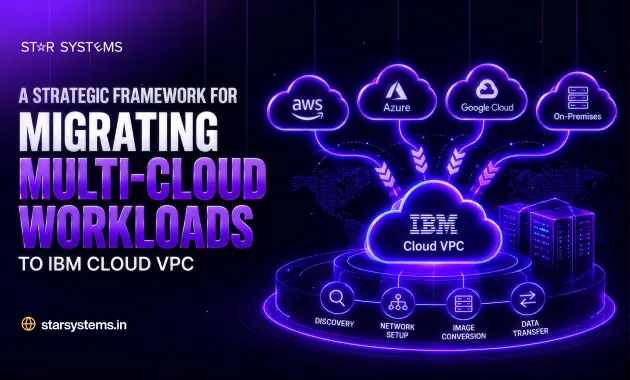
The risk: A multi-cloud migration multiplies the challenges. Each platform has its own networking model, identity system, and tools, which makes consistent security and monitoring difficult.
The solution: Standardize early. Create a common landing zone design, apply uniform tagging and access policies, and use unified monitoring so your team sees one picture instead of three.
10. Treating Go-Live as the Finish Line
The risk: Once applications are running, teams often move on. Without ongoing attention, costs creep up, performance drifts, and security gaps appear.
The solution: Plan for life after migration. Right-size resources, review spending monthly, update backup and recovery plans, and assign clear ownership for every cloud resource.
How Cloud Migration Services Reduce These Risks
You can manage many of these risks in-house, but doing so takes time, specialized tools, and people who have seen similar problems before. Cloud Migration Services bring that experience from day one. A good provider will assess your environment, recommend the right strategy for each workload, design a secure foundation, and run the migration in planned stages.
The value is even clearer when your plans involve more than one platform. A team that understands IBM Cloud migration, Azure Migration Services, and AWS Migration Services can compare options honestly and avoid forcing every workload into the same mold. That balanced view is especially important in a multi-cloud migration, where small design decisions affect cost and security for years.
What a Successful Cloud Migration Looks Like
Projects that succeed share a few habits. They start with business goals, discover everything before acting, choose a strategy for each workload, test early, and move in controlled phases. They also keep optimizing long after the last server is switched off. This is exactly where professional Cloud Migration Services add value, because they bring repeatable processes, proven tooling, and experience from many earlier projects.
Why Choose Star Systems Cloud Migration Services?
Our cloud migration services are built around the risks described above, so your project stays predictable from assessment to cutover.
- Automated discovery: Hidden dependencies are found before they cause trouble.
- Cost clarity up front: Compare current and cloud costs before you migrate.
- Security built in: Access rules and compliance needs are planned during design.
- Controlled cutover: Staged migration with live tracking, and restart from the exact failure point if something goes wrong.
This is powered by our Infra Bridge migration platform, backed by hands-on experience across IBM Cloud migration, Azure Migration Services, and AWS Migration Services.
Conclusion
Cloud migration projects rarely fail because of the technology itself. They fail because of weak planning, hidden assumptions, and missing expertise. Address these ten risks early, and your move becomes predictable, secure, and cost-effective.
Planning a migration? Talk to Star Systems for a free assessment of your environment and a clear, step-by-step migration roadmap.