What Are Cloud Migration Services?
Cloud migration services help you move applications, data, and infrastructure from on-premises systems or from one cloud to another, safely and with minimal disruption. A complete service usually covers:
- Discovery and assessment of your current environment
- Migration strategy and planning
- Design of a secure cloud foundation
- Data and application migration
- Testing, cutover, and rollback planning
- Post-migration optimization and support
Depending on your goals, this may involve IBM Cloud migration, Azure Migration Services, AWS Migration Services, or a combination of platforms.
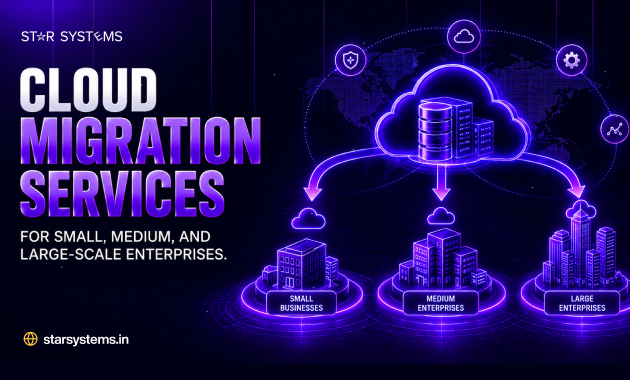
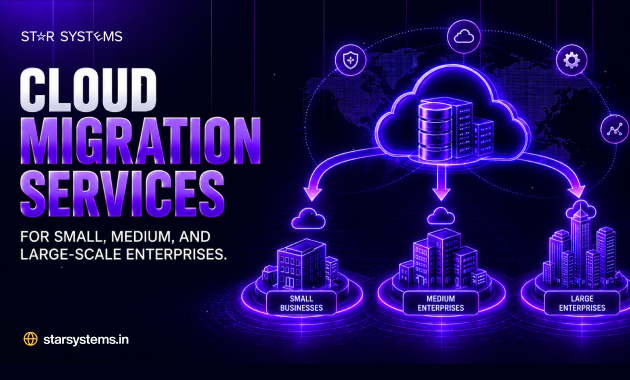
Cloud Migration Services for Small Businesses
Small businesses usually want three things: low cost, simplicity, and as little downtime as possible. Most do not have a dedicated IT team, and a few key systems carry the whole business.
For cloud migration services for small businesses, the best approach is often straightforward. Start with email, file storage, and core business applications. Rehost workloads wherever possible instead of redesigning them. Choose pay-as-you-go pricing and managed services so you are not maintaining complicated infrastructure. Put basic security in place from the start, including multi-factor authentication and automated backups.
The payoff is real: no hardware purchases, easy scaling, better data protection, and the freedom to work from anywhere. The focus should be on quick wins and predictable costs.
Cloud Migration Services for Medium-Sized Companies
Mid-sized companies are in a growth phase. Their environment is often a mix of legacy applications, newer systems, and cloud tools that were adopted over time. Priorities shift toward scalability, performance, stronger security, and cost control.
Here, cloud migration services for SMEs should go deeper. Assess applications one by one. Replatform databases to managed services where it makes sense. Build a proper landing zone with clear networking and access rules. Keep some systems on-premises if they are not ready to move, and connect them securely in a hybrid setup. This is also the right time to build cost-tracking habits, before spending grows out of control.
A well-planned move at this stage prevents technical debt from piling up as the company grows.
Enterprise Cloud Migration for Large Organizations
Large enterprises face a different scale of challenge: hundreds of applications, strict compliance rules, several business units, and often more than one cloud. A failed migration here can affect customers, revenue, and reputation.
Successful enterprise cloud migration depends on governance and repeatability. Move in carefully planned waves instead of one big cutover. Standardize landing zones, security policies, and tooling across teams. Automate wherever possible. Respect data residency and regulatory requirements, and prepare detailed rollback plans for every phase. Just as important, invest in change management, because enterprise migration is as much about people and process as it is about technology.
Many large organizations also adopt a multi-cloud or hybrid model, which adds flexibility but needs strong, consistent oversight.
Quick Comparison by Business Size
| Factor |
Small Business |
Medium Company |
Large Enterprise |
| Main goal |
Simplicity and low cost |
Scalability and control |
Governance and compliance |
| Typical strategy |
Rehost, use managed services |
Rehost and replatform |
Mixed strategies in phased waves |
| Biggest risk |
Downtime and skills gap |
Hidden dependencies |
Complexity and compliance |
| Typical timeline |
Weeks |
A few months |
Phased, long-term |
A Simple Framework That Works at Any Size
Whatever your size, a sound cloud migration strategy follows the same basic path:
- Discover: Inventory applications, data, and dependencies.
- Plan: Set goals and pick a strategy for each workload.
- Design: Build a secure, well-structured cloud foundation.
- Pilot: Test with a low-risk application first.
- Migrate: Move workloads in controlled phases with rollback plans.
- Optimize: Monitor, right-size, and review costs regularly.
The steps stay the same. What changes is the depth, the speed, and the amount of governance around them.
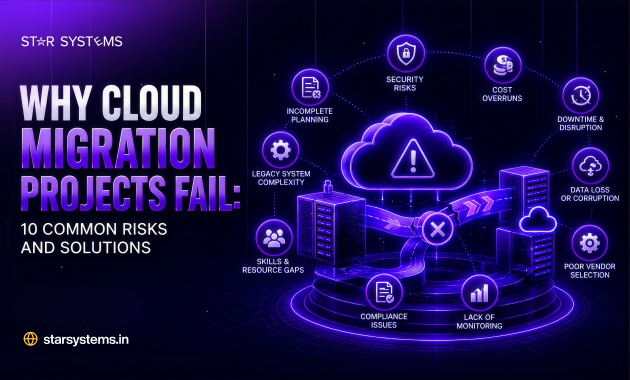
Mistakes to Avoid, No Matter Your Size
- Moving without a clear business goal or a defined budget.
- Skipping discovery and missing hidden dependencies between applications.
- Treating security and compliance as something to fix after go-live.
- Choosing a platform first and only later checking whether workloads fit it.
- Ignoring training, so your own team cannot manage the new environment.
Whether you need IBM Cloud migration, Azure Migration Services, or AWS Migration Services, avoiding these five mistakes does more for your success than any single tool. Good planning is the cheapest insurance you can buy, and it applies equally to a ten-person startup and a multinational group.
How to Choose the Right Cloud Migration Partner
The right partner can save months of effort and avoid expensive mistakes. When comparing providers, look for:
- Proven experience across IBM Cloud, Azure, and AWS
- A clear, documented migration methodology
- Strong security and compliance knowledge
- Transparent pricing with no hidden surprises
- Support after go-live, not just during migration
At Star Systems, we structure our approach to the size and goals of each business, so a small company gets a simple, affordable path while a large enterprise gets a structured, phased program.
Conclusion
Cloud migration is not a single project template. It is a plan shaped by your size, your budget, and your risk tolerance. Choose services that match your stage of growth, start with a proper assessment, and move step by step. Done well, migration becomes a foundation for growth rather than a disruption.
Not sure where to start? Contact Star Systems for a free assessment and a migration plan built around your business size and goals.